


ΓΙΑ ΤΗΝ ΑΓΓΛΙΚΗ ΓΛΩΣΣΑ
Online:
http://www.englishjet.com/english_courses_files/tests.htm
Σε
αυτόν τον ιστότοπο θα βρείτε ηλεκτρονικά τεστ για κάθε επίπεδο
γλωσσομάθειας σύμφωνα με την 6βαθμη κλίμακα του Συμβουλίου της Ευρώπης.
Το τεστ κάθε επιπέδου αποτελείται από 68 ερωτήσεις πολλαπλής επιλογής
και σύντομων απαντήσεων. Αφού ο μαθητής απαντήσει στις ερωτήσεις,
αυτόματα ο υπολογιστής δίνει τον αριθμό των σωστών απαντήσεων και
επιβεβαιώνει το επίπεδο του.
http://english.ua/eng/placement-test/
Πρόκειται
για ένα τεστ κατάταξης που περιέχει 52 ερωτήματα πολλαπλής επιλογής. Ο
μαθητής απαντάει τα ερωτήματα μέχρι εκεί που μπορεί. Ο υπολογιστής
βγάζει αυτόματα τον αριθμό των σωστών απαντήσεων και τον κατατάσσει σε
επίπεδο (σύμφωνα με την βρετανική κλίμακα και την 6βαθμη κλίμακα του
Συμβουλίου της Ευρώπης)
Pdf:
http://www.cambridge.org/gb/elt/catalogue/subject/project/custom/
item6039738/English-Unlimited-Placement-test/
?site_locale=en_GB¤tSubjectID=382378
Στον
ιστότοπο αυτό θα βρείτε τεστ κατάταξης που μπορείτε να κατεβάσετε και
να το φωτοτυπήσετε. Το τεστ κατάξης αποτελείται από δύο τεστ: ένα γραπτό
τεστ και ένα προφορικό. Το γραπτό τεστ αποτελείται από 120 ερωτήματα
πολλαπλής επιλογής και δίνεται πρώτα. Οι μαθητές απαντούν όσα ερωτήματα
μπορούν και υπολογίζεται ο αριθμός των σωστών απαντήσεων και το επίπεδο
τους σύμφωνα με την 6βαθμη κλίμακα του Συμβουλίου της Ευρώπης. Εφόσον
υπολογιστεί το επίπεδο βάσει του γραπτού τεστ., ο εκπαιδευτικός κάνει
και προφορική εξέταση στο επίπεδο που καθόρισε το γραπτό τεστ. Το
προφορικό τεστ αποτελείται από 5 ερωτήσεις. Ανάλογα με την απόδοση των
μαθητών στο προφορικό τεστ επιβεβαιώνεται το επίπεδο του. Στον ιστότοπο
υπάρχουν αναλυτικές πληροφορίες για τον εκπαιδευτικό σχετικά με την
οργάνωση και «λογική» του τεστ καθώς και με τον υπολογισμό της
βαθμολογίας και τον καθορισμό επιπέδου.
http://www.ncca.ie/en/Curriculum_and_Assessment/Inclusion/
English_as_an_Additional_Language/IILT_Materials/Primary
Κατάλληλο
για την Α/βαθμια είναι το Primary School Assessment Kit ένα test με 4
skills (writing, listening, reading, speaking) του National Council for
Curriculum and Assessment από την Ιρλανδία. Είναι διαθέσιμο σε pdf μορφή
έτσι οι εκπαιδευτικοί μπορούν να το κατεβάσουν να το εκτυπώσουν και να
το δώσουν στους μαθητές. Είναι βασισμένο στο Common European Framework
και είναι για επίπεδα Α1,Α2,Β1. Επίσης έχει 3 sets of tests ένα για
placement, ένα για progress και ένα για final evaluation. Ανάλογα με το
σκορ οι μαθητές του κάθε επιπέδου μπορούν να χωριστούν σε Α1.1, Α1.2,
Α1.3 κτλ. Τέλος, παρέχονται αναλυτικές οδηγίες για τη διόρθωση και το
σκορ.
ΓΙΑ ΤΗΝ ΓΑΛΛΙΚΗ ΓΛΩΣΣΑ
http://www.azurlingua.com/test/index.html
Πρόκειται
για ένα ηλεκτρονικό τεστ κατάταξης που περιέχει 2 είδη δοκιμασιών:
κατανόηση γραπτού λόγου (που περιλαμβάνει ερωτήσεις γραμματικής και
λεξιλογίου και διαρκεί 40 λεπτά) και κατανόηση προφορικού λόγου (που
διαρκεί 20 λεπτά). 60 + 20 ερωτήσεις πολλαπλής επιλογής. Περιλαμβάνει
κατανόηση κειμένου, ασκήσεις λεξιλογίου και γραμματικής (40 λεπτά) καθώς
και ακουστική κατανόηση (20 λεπτά).
Δίνονται οι ορθές απαντήσεις.
Ακόμη και χωρίς καμιά απάντηση, δίνεται feed back Κατατάσσει τον
εκπαιδευόμενο σύμφωνα με την 6βαθμη κλίμακα του συμβουλίου της Ευρώπης.
http://fr.altissia.com/test-de-niveau-francais-altissia.html
Πρόκειται
για ηλεκτρονικό τεστ κατάταξης που περιλαμβάνει 35 ερωτήσεις πολλαπλής
επιλογής και σύντομων απαντήσεων. Περιλαμβάνει 2 μέρη: γραμματική (20
ερωτήσεις) και λεξιλόγιο (15 ερωτήσεις). Κατατάσσει τον εκπαιδευόμενο
σύμφωνα με την 6βαθμη κλίμακα του συμβουλίου της Ευρώπης. Μπορεί ο
μαθητής να επιλέξει σε ποιο επίπεδο γλωσσομάθειας θέλει να εξεταστεί..
Δεν δίνει τις ορθές απαντήσεις αλλά βάσει των σωστών απαντήεων προσδιορίζει το επιπέδο γλωσσομάθειας.
Το
τεστ προσαρμόζεται στο επίπεδο του αξιολογούμενου (Les questions
s'adaptent au fur et à mesure à votre niveau. Ne vous inquiétez donc pas
si les questions deviennent rapidement plus faciles ou plus
difficiles).
http://www.testpodium.com/en/main/englischtest_02.asp
Πρόκειται
για ηλεκτρονικό τεστ κατάταξης που δίνει τη δυνατότητα επιλογής
επιπέδου. Περιέχει 40 ερωτήσεις πολλαπλής επιλογής (+V/F) και εξετάζει 5
τομείς:
• Γραμματική
• Λεξιλόγιο,
• Επικοινωνία
• Ακουστική κατανόηση
• Γραπτή κατανόηση
και διαρκεί 35 λεπτά
Δίνει
συνολικό σκορ (ποσοστό), επιμέρους ποσοστά (Γραμματική, Λεξιλόγιο,
Επικοινωνία, Ακουστική κατανόηση, Γραπτή κατανόηση) αλλά και επίπεδο
σύμφωνα με τη βρετανική κλίμακα την οποία πρέπει στη συνέχεια να ανάγετε
στην 6βαθμη κλίμακα του συμβουλίου της Ευρώπης. Οδηγίες δίνονται στην
Αγγλική.
Οι συνάδελφοι εκπαιδευτικοί της Γαλλικής μπορούν αν
επισκεφτούν επίσης την ιστοσελίδα του Le Point du FLE
http://www.lepointdufle.net/tests-de-francais.htm όπου υπάρχουν αρκετά
άλλα τεστ κατάταξης.
ΓΙΑ ΤΗΝ ΓΕΡΜΑΝΙΚΗ ΓΛΩΣΣΑ
online
http://www.sprachtest.de/einstufungstest-deutsch
Ηλεκτρονικό
τεστ κατάταξης με αυτοαξιολόγηση. Εξετάζει κατανόηση γραπτού και
προφορικού λόγου, και λεξιλογικός. Εξετάζει επίπεδα Α1, Α2 και Β1 και
διαρκεί περίπου 15 λεπτά
http://www.goethe.de/cgi-bin/einstufungstest/einstufungstest.pl
Ηλεκτρονικό
τεστ κατάταξης με αυτοαξιολόγηση. Εξετάζει μέσω ερωτημάτων πολλαπλής
επιλογής κατανόηση γραπτού λόγου, λεξιλόγιο και γραμματική Εξετάζονται
όλα τα επίπεδα και διαρκεί 15 λεπτά
http://www.wifi.at/DE/Karriere/ThemenProdukte/
Sprachen/Einstufungstests/einstufungstests.aspx
Ηλεκτρονικό
τεστ κατάταξης με αυτοαξιολόγηση, προσφέρεται σχάρα επιλογής επιπέδου
δυσκολίας με ξεχωριστά τεστ για κάθε επίπεδο. Εξετάζει μέσω ερωτημάτων
πολλαπλής επιλογής κατανόηση γραπτού και προφορικού λόγου, λεξιλόγιο και
γραμματική
PDF
http://www.hueber.de/seite/downloads_daf
Εκτυπώσιμα
τεστ κατάταξης με αυτοαξιολόγηση, βασισμένα σε συγκεκριμένες διδακτικές
σειρές του εκδοτικού οίκου. Εξετάζει μέσω ερωτημάτων πολλαπλής επιλογής
κατανόηση γραπτού λόγου, λεξιλόγιο και γραμματική.
Μπορεί να εκτυπωθεί με λύσεις μετά από εγγραφή σε λίστα αλληλογραφίας
http://www.deutschesprachschule.de/etest/einstufungstest.php
Ηλεκτρονικό
τεστ κατάταξης με αυτοαξιολόγηση. Διαρκεί 30 λεπτά και εξετάζει μέσω
ερωτημάτων πολλαπλής επιλογής κατανόηση γραπτού λόγου, λεξιλόγιο και
γραμματική. Εξετάζονται τα επίπεδα Α1, Α2 και Β1.
Μπορεί να εκτυπωθεί από τη σελίδα, χωρίς ιδιαίτερη διαμόρφωση, απαντητικό φυλλάδιο δεν προσφέρεται
http://www.sli.uni-freiburg.de/sprachtests-zertifikate/
deutsch/einstufungstest_deutsch
Ηλεκτρονικό
τεστ κατάταξης σε αποθηκεύσιμη και εκτελέσιμη μορφή (zip αρχείο).
Εξετάζει μέσω ερωτημάτων πολλαπλής επιλογής κατανόηση γραπτού λόγου,
λεξιλόγιο και γραμματική.
Μπορεί να εκτυπωθεί
Σημείωση: στο κάτω μέρος της οθόνης υπάρχουν παραπομπές και σε άλλους ιστότοπους που προσφέρουν διαγνωστικά τεστ.
http://www.eb-zuerich.ch/files/pdf/einstufungstests/deutscha1.pdf
Εκτυπώσιμο
/ ηλεκτρονικό τεστ κατάταξης με διαδικασία αυτοαξιολόγησης για το
επίπεδο Α1. Εξετάζει μέσω ερωτημάτων πολλαπλής επιλογής κατανόηση
γραπτού λόγου, λεξιλόγιο και γραμματική.
http://www.eb-zuerich.ch/files/pdf/einstufungstests/deutscha2.pdf
Εκτυπώσιμο / ηλεκτρονικό τεστ κατάταξης με διαδικασία αυτοαξιολόγησης
Διάρκεια: άγνωστο
Δεξιότητες: Κατανόηση γραπτού λόγου, λεξιλογικός και γραμματικός έλεγχος
Λειτουργία: ασκήσεις πολλαπλών επιλογών
Αυτοματισμός: όχι
Επίπεδα ΕΠΣ: Α2
Μπορεί να εκτυπωθεί: ναι
http://www.eb-zuerich.ch/files/pdf/einstufungstests/deutschb1.pdf
Εκτυπώσιμο
/ ηλεκτρονικό τεστ κατάταξης με διαδικασία αυτοαξιολόγησης. Εξετάζει το
επίπεδο Β1 μέσω ερωτημάτων πολλαπλής επιλογής εστιάζοντας στη κατανόηση
γραπτού λόγου, λεξιλόγιο και γραμματική.
8.10.12
LEARNING A LANGUAGE
by Olivia McMahon
Learning a language
is like doing a jigsaw puzzle
of a million pieces
with a picture that keeps changing.
It's like getting lost in a foreign city
without a map.
It's like playing tennis without a ball,
like being an ant in a field of grasshoppers.
It's being an acrobat with a broken leg,
an actor without a script,
a carpenter without a saw,
a storyteller without a middle or an end.
But then gradually
it’s like being out in the early morning
with the mists lifting.
It’s like a chink of light under a door,
like finding the glove you were looking for,
catching the train you thought you were going to miss,
getting an unlooked-for present,
exchanging a smile.
And then one day it's like riding a bicycle
very fast downhill.
2.10.12
Duolingo, η ιστοσελίδα εκμάθησης ξένων γλωσσών που συγκέντρωσε 15 εκατ. δολάρια
Duolingo, η ιστοσελίδα εκμάθησης ξένων γλωσσών που συγκέντρωσε 15 εκατ. δολάρια.
Μία από τις πλέον υποσχόμενες start-up εταιρείες στο χώρο της τεχνολογίας είναι η Duolingo, η οποία μέσα σε διάστημα τριών μηνών κατόρθωσε να αποσπάσει χρηματοδότηση $15 εκατομμυρίων από τις New Enterprise Associates (NEA) και Union Square Ventures.
Στην ουσία πρόκειται για μια ιστοσελίδα που μαθαίνει στους χρήστες ξένες γλώσσες ενώ παράλληλα συμβάλει στη μετάφραση web περιεχομένου. Για παράδειγμα, έστω ότι γνωρίζετε Αγγλικά και θέλετε να μάθετε Ισπανικά. Μόλις εισέλθετε στο Duolingo (μέσω του λογαριασμού σας στα Facebook/Twitter ή του email σας), θα σας εμφανιστούν προτάσεις από το Διαδίκτυο στην ισπανική γλώσσα και θα κληθείτε να τις μεταφράσει στα αγγλικά ανάλογα πάντα με το επίπεδο στο οποίο βρίσκεστε.
Επιπλέον, η ιστοσελίδα παρέχει δωρεάν υπηρεσία μετάφρασης η οποία υπόσχεται μεγαλύτερη ακρίβεια από τα Google Translate, Altavista και άλλες παρόμοιες υπηρεσίες. Πίσω από την ιδέα και την ανάπτυξη της ιστοσελίδας βρίσκεται ο Luis Von Ahn, υποψήφιος Διδάκτορας του Carnegie Mellon, που στο δυναμικό του έχει δύο ακόμα projects τα οποία εξαγοράστηκαν από τη Google.
Μία από τις πλέον υποσχόμενες start-up εταιρείες στο χώρο της τεχνολογίας είναι η Duolingo, η οποία μέσα σε διάστημα τριών μηνών κατόρθωσε να αποσπάσει χρηματοδότηση $15 εκατομμυρίων από τις New Enterprise Associates (NEA) και Union Square Ventures.
Στην ουσία πρόκειται για μια ιστοσελίδα που μαθαίνει στους χρήστες ξένες γλώσσες ενώ παράλληλα συμβάλει στη μετάφραση web περιεχομένου. Για παράδειγμα, έστω ότι γνωρίζετε Αγγλικά και θέλετε να μάθετε Ισπανικά. Μόλις εισέλθετε στο Duolingo (μέσω του λογαριασμού σας στα Facebook/Twitter ή του email σας), θα σας εμφανιστούν προτάσεις από το Διαδίκτυο στην ισπανική γλώσσα και θα κληθείτε να τις μεταφράσει στα αγγλικά ανάλογα πάντα με το επίπεδο στο οποίο βρίσκεστε.
Επιπλέον, η ιστοσελίδα παρέχει δωρεάν υπηρεσία μετάφρασης η οποία υπόσχεται μεγαλύτερη ακρίβεια από τα Google Translate, Altavista και άλλες παρόμοιες υπηρεσίες. Πίσω από την ιδέα και την ανάπτυξη της ιστοσελίδας βρίσκεται ο Luis Von Ahn, υποψήφιος Διδάκτορας του Carnegie Mellon, που στο δυναμικό του έχει δύο ακόμα projects τα οποία εξαγοράστηκαν από τη Google.
ΤΕΣΤ ΚΑΤΑΤΑΞΗΣ
ΡΕΠΟΡΤΑΖ:esos.gr
Προκειμένου να διευκολυνθούν οι ξενόγλωσσοι εκπαιδευτικοί στα πιλοτικά σχολεία στην κατάταξη μαθητών ανά επίπεδο γλωσσομάθειας του Πανεπιστήμιο Αθήνας προτείνει τα παρακάτω ΤΕΣΤ ΚΑΤΑΤΑΞΗΣ (ηλεκτρονικά και εκτυπώσιμα) για την κάθε γλώσσα:
Προκειμένου να διευκολυνθούν οι ξενόγλωσσοι εκπαιδευτικοί στα πιλοτικά σχολεία στην κατάταξη μαθητών ανά επίπεδο γλωσσομάθειας του Πανεπιστήμιο Αθήνας προτείνει τα παρακάτω ΤΕΣΤ ΚΑΤΑΤΑΞΗΣ (ηλεκτρονικά και εκτυπώσιμα) για την κάθε γλώσσα:
11.8.12
Γλωσσολογικό – Εκπαιδευτικό Συνέδριο «Τζαρτζάνεια 2012» στον Τύρναβο Λάρισας
Στις 7,8 και 9 Δεκεμβρίου πρόκειται να διεξαχθεί το
Γλωσσολογικό – Εκπαιδευτικό Συνέδριο «Τζαρτζάνεια 2012» στον Τύρναβο Λάρισας
γενέτειρα του γλωσσολόγου Αχιλλέα Τζαρτζάνου.
Μπορείτε
να ενημερωθείτε για την εγγραφή σας ως εισηγήτριες/ητές ή ακροάτριες/ατές στην
ιστοσελίδα του συνεδρίου http://tzartzaneia2012.weebly.com/index.html
η οποία θα ανανεώνεται συνεχώς.15.7.12
East speaks west, west speaks east: Two continents, one classroom
By Edith Flores Wolff, Global German Youth Connect, Overath, Germany
Launched in 2010 at the Asia-Europe Classroom (AEC) Net Conference, East Speaks West, West Speaks East (ESWWSE) is an ICT- based collaborative project aiming to promote and explore online language learning among high school students from public or private schools from Europe and Asia through the application of open source ICT web tools. Gone are the days when language learning was very much limited, costly, and a matter of privilege. Language learning has evolved through the years through ICT web tools. It has become more innovative, inventive, alive, collaborative and fun, too.
Thirteen member schools of the AEC Network have successfully joined this project for two years. Following the philosophy of "I teach mine, I learn yours; I learn yours, you learn mine", it is an ICT-supported collaborative project which provides European and Asian 1st year to 3rd year secondary school students a chance to share, interact, teach, and learn the languages of their foreign counterparts by using the wheel of language learning: assimilation - listening, repetition, and immersion. This process of exchange takes place normally in a span of seven to nine months that cover two phases: 1st phase - Language Material Production (mother language) and 2nd phase - Language Learning (foreign language). The project is concluded after the production and staging of a play in the foreign language chosen by the students. Further, the participants work hand in hand in continuously discovering ICT web tools to effectively learn the language and transport knowledge. Language learning websites, language portals, and even virtual based language schools are defying distance and time between learners and teachers.
European and Asian students are teaching and learning from each other. They are being encouraged not just to consume from the Net but also to contribute their knowledge for the benefit of others. Students are actively bringing their contribution forward by creating a collaborative platform in the Net by utilizing or applying the ICT web tools.
Faster, more efficient and affordable internet access made the idea of “Two Continents, One Classroom” possible which could be considered as a major breakthrough in language education. Language learning has gone a long way and has become more active. The availability of Open Source ICT web tools for free or for a very low cost - from books to LP records, to audio cassettes, to CDs, to MP3, and the Text -to-Speech Software - helps students and teachers carry out the tasks expected from them. This project utilizes Audio and Video recording programs/ tools, Basic open software and Video Publishing Sites. To name a few: audio and video recording programs/ tools (Audacity, DVD maker, Slide maker, Movie Maker, Green Screen), basic open software ( Audacity, Text to Speech Translator, Tagxedo, Wordle, Quizlet, Audio Converter, Video Converter, Google Docs), video publishing sites ( www.youtube.com , voicethread.com), etc.
Present Development of the Project
From January 2012 to the present, two schools from the Philippines (Hope Academy of Rizal and Olongapo City National High School) and one school from India (Apeejay Pitampura) are participating in a long term language project under ESWWSE, extending beyond the 7- to 9-month project period to learn German. At the moment, the students are woking on the theme "Goethe meets Tagore." In comparing these two brillant minds, Johann Wolfgang von Goethe of Germany and Rabindranath Tagore of India, the students would be discovering similarities and differences between these countries through literature.
To increase the benefits of the project on the students, they are further encouraged to take at least one of the German Language Proficiency Exams at Goethe Institute and acquire at least one German Language Certificate before completing their secondary schools. They will be guided by the project proponents during the preparation for the proficiency exams.
Evaluation
The project has encountered a number of difficulties in its implementation including dealing with different time zones for the participating schools, lack of time among students and teachers in some schools to engage in project activities, and lack of creativity of some teachers and students. ICT-related challenges included lack of Internet access / poor Internet connection, low technical support in schools, lack of knowledge among some participants in the application of web tools, very low exposure of teachers and students to free software available on the internet which could serve as alternative solutions when technical problems occur (e.g. managing and transferring files, files conversion), and restrictive Internet security settings at schools that prevented a number of interactive activities from being accessed.
Despite these challenges, the students positively welcomed the pedagogical approach of this project. The prospect of getting a chance of learning a foreign language which are not normally available or not a part of their school curriculum excites them and serves as a motivating factor. Students and teachers alike have the chance in gaining and applying their knowledge and skills in using ICT web tools as well as networking with other members through the project’s networking sites.
Furthermore, they get to learn and examine cultural differences and similarities among themselves through online interaction. It must also be added that this project could serve as a medium in motivating students who have learning difficulties in schools like those who are suffering from Attention Deficit Hyperactivity Disorder. One of the participating schools observed that students with this condition have actively engaged in the project and learned languages through role-playing activities.
In its two years of existence, ESWWSE has been nominated for several awards and was presented in several international conferences. This project was presented in the 4th edition of the International Conference "ICT for Language Learning" in Florence on 20-21 October 2011. Moreover, ESWWSE belonged to the Top 50 entries out of 575 projects submitted at the eLearning Awards 2010 run by the European Schoolnet where it was nominated for the "Special Category for the Outstanding Teachers Award". AEC also conferred this project an Excellence Award Certificate in 2010 in India and a Merit Award in Ireland in 2011.
For more information, please visit: eswwse.webs.com
Contact:
Edith Flores Wolff,
Global German Youth Connect,
Overath, Germany
eswwse.webs.com;
efw2010@googlemail.com
Launched in 2010 at the Asia-Europe Classroom (AEC) Net Conference, East Speaks West, West Speaks East (ESWWSE) is an ICT- based collaborative project aiming to promote and explore online language learning among high school students from public or private schools from Europe and Asia through the application of open source ICT web tools. Gone are the days when language learning was very much limited, costly, and a matter of privilege. Language learning has evolved through the years through ICT web tools. It has become more innovative, inventive, alive, collaborative and fun, too.
Thirteen member schools of the AEC Network have successfully joined this project for two years. Following the philosophy of "I teach mine, I learn yours; I learn yours, you learn mine", it is an ICT-supported collaborative project which provides European and Asian 1st year to 3rd year secondary school students a chance to share, interact, teach, and learn the languages of their foreign counterparts by using the wheel of language learning: assimilation - listening, repetition, and immersion. This process of exchange takes place normally in a span of seven to nine months that cover two phases: 1st phase - Language Material Production (mother language) and 2nd phase - Language Learning (foreign language). The project is concluded after the production and staging of a play in the foreign language chosen by the students. Further, the participants work hand in hand in continuously discovering ICT web tools to effectively learn the language and transport knowledge. Language learning websites, language portals, and even virtual based language schools are defying distance and time between learners and teachers.
European and Asian students are teaching and learning from each other. They are being encouraged not just to consume from the Net but also to contribute their knowledge for the benefit of others. Students are actively bringing their contribution forward by creating a collaborative platform in the Net by utilizing or applying the ICT web tools.
Faster, more efficient and affordable internet access made the idea of “Two Continents, One Classroom” possible which could be considered as a major breakthrough in language education. Language learning has gone a long way and has become more active. The availability of Open Source ICT web tools for free or for a very low cost - from books to LP records, to audio cassettes, to CDs, to MP3, and the Text -to-Speech Software - helps students and teachers carry out the tasks expected from them. This project utilizes Audio and Video recording programs/ tools, Basic open software and Video Publishing Sites. To name a few: audio and video recording programs/ tools (Audacity, DVD maker, Slide maker, Movie Maker, Green Screen), basic open software ( Audacity, Text to Speech Translator, Tagxedo, Wordle, Quizlet, Audio Converter, Video Converter, Google Docs), video publishing sites ( www.youtube.com , voicethread.com), etc.
Present Development of the Project
From January 2012 to the present, two schools from the Philippines (Hope Academy of Rizal and Olongapo City National High School) and one school from India (Apeejay Pitampura) are participating in a long term language project under ESWWSE, extending beyond the 7- to 9-month project period to learn German. At the moment, the students are woking on the theme "Goethe meets Tagore." In comparing these two brillant minds, Johann Wolfgang von Goethe of Germany and Rabindranath Tagore of India, the students would be discovering similarities and differences between these countries through literature.
To increase the benefits of the project on the students, they are further encouraged to take at least one of the German Language Proficiency Exams at Goethe Institute and acquire at least one German Language Certificate before completing their secondary schools. They will be guided by the project proponents during the preparation for the proficiency exams.
Evaluation
The project has encountered a number of difficulties in its implementation including dealing with different time zones for the participating schools, lack of time among students and teachers in some schools to engage in project activities, and lack of creativity of some teachers and students. ICT-related challenges included lack of Internet access / poor Internet connection, low technical support in schools, lack of knowledge among some participants in the application of web tools, very low exposure of teachers and students to free software available on the internet which could serve as alternative solutions when technical problems occur (e.g. managing and transferring files, files conversion), and restrictive Internet security settings at schools that prevented a number of interactive activities from being accessed.
Despite these challenges, the students positively welcomed the pedagogical approach of this project. The prospect of getting a chance of learning a foreign language which are not normally available or not a part of their school curriculum excites them and serves as a motivating factor. Students and teachers alike have the chance in gaining and applying their knowledge and skills in using ICT web tools as well as networking with other members through the project’s networking sites.
Furthermore, they get to learn and examine cultural differences and similarities among themselves through online interaction. It must also be added that this project could serve as a medium in motivating students who have learning difficulties in schools like those who are suffering from Attention Deficit Hyperactivity Disorder. One of the participating schools observed that students with this condition have actively engaged in the project and learned languages through role-playing activities.
In its two years of existence, ESWWSE has been nominated for several awards and was presented in several international conferences. This project was presented in the 4th edition of the International Conference "ICT for Language Learning" in Florence on 20-21 October 2011. Moreover, ESWWSE belonged to the Top 50 entries out of 575 projects submitted at the eLearning Awards 2010 run by the European Schoolnet where it was nominated for the "Special Category for the Outstanding Teachers Award". AEC also conferred this project an Excellence Award Certificate in 2010 in India and a Merit Award in Ireland in 2011.
For more information, please visit: eswwse.webs.com
Contact:
Edith Flores Wolff,
Global German Youth Connect,
Overath, Germany
eswwse.webs.com;
efw2010@googlemail.com
2.6.12
Teachers Shake Up Shakespeare with Digital Media
By Russell Scott Smith

"My name is Macbeth / I'm the Thane of Glamis. / I might not be the king / but I'm still hella famous."
Terry, a student at Toronto's York Mills Collegiate Institute, wrote that rap for his tenth-grade English class as part of a music video depicting William Shakespeare's famous play Macbeth. "We got 100 percent on it!" Terry recalls.
More important, adapting the play into a modern rap helped Terry understand the Bard's old English prose. "I'd never had a chance to interpret one of Shakespeare's stories in a contemporary way before," he says. "Shakespeare's stories are timeless."
That kind of genuine enthusiasm from a millennial generation student is music to a teacher's ears. "Terry's video was fantastic," says his teacher, Meredith Szewchuk, who taught the tenth grader last year at York, a public high school. Szewchuk is part of a new wave of Shakespeare teachers who want their teenage students to reimagine the Bard using the younger generation's language and media.
Raps, podcasts, and short films are perfect vehicles for teaching Hamlet and Macbeth, says Peggy O'Brien, the former director of education at the Folger Shakespeare Library, in Washington, DC. "Kids have been handed these plays like they're sacrosanct, holy things, when actually they're gritty and alive."
As many scholars point out, Shakespeare was the 16th-century equivalent of a remix artist. Most of his plots were borrowed from other authors, and several of his plays were written on the fly in collaboration with others. He would have probably approved of today's participatory culture, in which students simultaneously create and consume art.
Teachers are finding that allowing students to emulate the playwright and make the text their own gets them more excited to learn the plays. "You have to get those words in your mouth and get your body moving," says Robert Young, who holds O'Brien's former position at the library. "Once you perform a scene, you really understand it." Having students perform is the key to learning Shakespeare effectively, and video and audio tools enhance that performance for today's learners.
Some of Cabat's students produce faux trailers for Shakespeare movies or reedit scenes from existing films. One group recut the murder of King Duncan in Roman Polanski's The Tragedy of Macbeth to make it more nightmarish. "They felt it needed some improvement," Cabat says with a laugh. After finishing their movies, students write about the experience. "I don't want to throw the baby out with the bathwater," he says. "It's still them wrestling with the text. But they're using different tools."
Posting their short films online allows students to experience a level of relevance that only a public medium like YouTube can offer. Suddenly, homework assignments become works of art that anyone might download, watch, and maybe even enjoy.
Type "Shakespeare English project" into YouTube's search box, and you'll find links to a long list of school assignments. Terry's Macbeth rap is there. So is a short video retelling of Romeo and Juliet with animated characters from a video game, The Sims 2. Another high school student posted Hamlet: The Silent Film, a Keystone Kops-like version of the Prince of Denmark's climactic swordfight with Laertes.
And there's the decidedly low tech The New Othello Rap, by Katie Kovacs and Danny Wittels. This video isn't complicated -- just two students in front of a blackboard, rapping lyrics out of a spiral notebook. But the kids do a spot-on summary of the play, and with a good beat: "Iago's lying, Iago's cheating. / Iago needs a good beatin'. / Iago's lying, Iago's cheating. / He's got to stop all this deceivin'." You can also find a mashup of clips from Polanski's Macbeth to a song by the Geto Boys, a hip-hop group from Texas.
Some of these YouTube English-project videos have received as many as 20,000 hits, in part because teachers at other high schools use them to engage their students. "That's the magic of Internet culture," says Christy Desmet, a professor of English at the University of Georgia. "Kids put their work out into the world, and other people see it and care about it. It's very empowering."
There's even a reconstruction of the Globe Theatre in the virtual world called Second Life. In May 2009, these actors and their avatars -- with names like Caliban Jigsaw and Prospero Frobozz -- performed a live-action virtual Twelfth Night in their version of the Globe.
Meanwhile, teachers are brainstorming more ways to bring students to Shakespeare through modern media. John Golden, a language arts curriculum and instruction specialist in Portland, Oregon, has his students analyze the "To be, or not to be" soliloquy from Hamlet by looking at how actors performed the famous monologue in seven movies.
In 1948, Sir Laurence Olivier delivered the soliloquy atop a cliff. In 1996, Sir Kenneth Branagh performed it in an ornate room with a chessboard floor, and in 1990, Mel Gibson delivered the lines from inside a crypt. In the 2000 version, the soliloquy is done as an interior monologue in Ethan Hawke's head as he wanders through the action section of his local Blockbuster video store. "Looking at these multiple versions and interpretations, students see that Shakespeare is still a living document," says Golden.
As Golden's students spend hours thinking about those 33 lines of text, they come to realize the power of Shakespeare's legacy. "I've had kids stop me in the grocery store years later," Golden says. "They'll launch into it: 'To be, or not to be. That is the question.' They still remember it. When we help students realize that Shakespeare is alive today, we're giving them a gift that lasts a lifetime."
"My name is Macbeth / I'm the Thane of Glamis. / I might not be the king / but I'm still hella famous."
Terry, a student at Toronto's York Mills Collegiate Institute, wrote that rap for his tenth-grade English class as part of a music video depicting William Shakespeare's famous play Macbeth. "We got 100 percent on it!" Terry recalls.
More important, adapting the play into a modern rap helped Terry understand the Bard's old English prose. "I'd never had a chance to interpret one of Shakespeare's stories in a contemporary way before," he says. "Shakespeare's stories are timeless."
That kind of genuine enthusiasm from a millennial generation student is music to a teacher's ears. "Terry's video was fantastic," says his teacher, Meredith Szewchuk, who taught the tenth grader last year at York, a public high school. Szewchuk is part of a new wave of Shakespeare teachers who want their teenage students to reimagine the Bard using the younger generation's language and media.
Raps, podcasts, and short films are perfect vehicles for teaching Hamlet and Macbeth, says Peggy O'Brien, the former director of education at the Folger Shakespeare Library, in Washington, DC. "Kids have been handed these plays like they're sacrosanct, holy things, when actually they're gritty and alive."
As many scholars point out, Shakespeare was the 16th-century equivalent of a remix artist. Most of his plots were borrowed from other authors, and several of his plays were written on the fly in collaboration with others. He would have probably approved of today's participatory culture, in which students simultaneously create and consume art.
Teachers are finding that allowing students to emulate the playwright and make the text their own gets them more excited to learn the plays. "You have to get those words in your mouth and get your body moving," says Robert Young, who holds O'Brien's former position at the library. "Once you perform a scene, you really understand it." Having students perform is the key to learning Shakespeare effectively, and video and audio tools enhance that performance for today's learners.
Shakespeare, Meet YouTube
Joshua Cabat's students film Shakespeare scenes as short videos. "It forces them to envision their own through-line, or interpretation, of the play," says Cabat, who teaches English and film studies at Roslyn High School, in Roslyn Heights, New York. "They have to work with the words and the subtext, getting to the emotional core of the scene."Some of Cabat's students produce faux trailers for Shakespeare movies or reedit scenes from existing films. One group recut the murder of King Duncan in Roman Polanski's The Tragedy of Macbeth to make it more nightmarish. "They felt it needed some improvement," Cabat says with a laugh. After finishing their movies, students write about the experience. "I don't want to throw the baby out with the bathwater," he says. "It's still them wrestling with the text. But they're using different tools."
Posting their short films online allows students to experience a level of relevance that only a public medium like YouTube can offer. Suddenly, homework assignments become works of art that anyone might download, watch, and maybe even enjoy.
Type "Shakespeare English project" into YouTube's search box, and you'll find links to a long list of school assignments. Terry's Macbeth rap is there. So is a short video retelling of Romeo and Juliet with animated characters from a video game, The Sims 2. Another high school student posted Hamlet: The Silent Film, a Keystone Kops-like version of the Prince of Denmark's climactic swordfight with Laertes.
And there's the decidedly low tech The New Othello Rap, by Katie Kovacs and Danny Wittels. This video isn't complicated -- just two students in front of a blackboard, rapping lyrics out of a spiral notebook. But the kids do a spot-on summary of the play, and with a good beat: "Iago's lying, Iago's cheating. / Iago needs a good beatin'. / Iago's lying, Iago's cheating. / He's got to stop all this deceivin'." You can also find a mashup of clips from Polanski's Macbeth to a song by the Geto Boys, a hip-hop group from Texas.
Some of these YouTube English-project videos have received as many as 20,000 hits, in part because teachers at other high schools use them to engage their students. "That's the magic of Internet culture," says Christy Desmet, a professor of English at the University of Georgia. "Kids put their work out into the world, and other people see it and care about it. It's very empowering."
Fast Forward
Shakespeare can easily be adapted to multiple media platforms. Christopher Shamburg, an associate professor of education at New Jersey City University, has worked with inner-city high school students on podcasts of Macbeth -- audio plays with sound effects and music. "These kids are bringing their own interpretations to bear," Shamburg says. "And what's a better, more authentic experience of Shakespeare? That, or taking a quiz?"There's even a reconstruction of the Globe Theatre in the virtual world called Second Life. In May 2009, these actors and their avatars -- with names like Caliban Jigsaw and Prospero Frobozz -- performed a live-action virtual Twelfth Night in their version of the Globe.
Meanwhile, teachers are brainstorming more ways to bring students to Shakespeare through modern media. John Golden, a language arts curriculum and instruction specialist in Portland, Oregon, has his students analyze the "To be, or not to be" soliloquy from Hamlet by looking at how actors performed the famous monologue in seven movies.
In 1948, Sir Laurence Olivier delivered the soliloquy atop a cliff. In 1996, Sir Kenneth Branagh performed it in an ornate room with a chessboard floor, and in 1990, Mel Gibson delivered the lines from inside a crypt. In the 2000 version, the soliloquy is done as an interior monologue in Ethan Hawke's head as he wanders through the action section of his local Blockbuster video store. "Looking at these multiple versions and interpretations, students see that Shakespeare is still a living document," says Golden.
As Golden's students spend hours thinking about those 33 lines of text, they come to realize the power of Shakespeare's legacy. "I've had kids stop me in the grocery store years later," Golden says. "They'll launch into it: 'To be, or not to be. That is the question.' They still remember it. When we help students realize that Shakespeare is alive today, we're giving them a gift that lasts a lifetime."
How to learn a foreign language online
By Elizabeth Landau, CNN
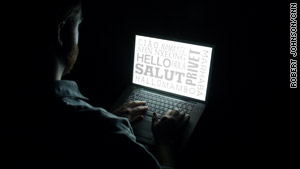 Atlanta, Georgia (CNN) -- Whether I was squeezing myself into a
crowded subway car or admiring the fall leaves around at Tsaritsino
Park, I was constantly learning new Russian words during my two-week
study trip to Moscow last October.
Atlanta, Georgia (CNN) -- Whether I was squeezing myself into a
crowded subway car or admiring the fall leaves around at Tsaritsino
Park, I was constantly learning new Russian words during my two-week
study trip to Moscow last October.
When I came back, I had vague notions of continuing my linguistic education through classes and books. Unfortunately, I couldn't find any convenient classes, and the textbooks didn't hold my attention for long.
I had basically given up when, about two months ago, I came upon the opportunity to use a program called Rosetta Stone. Having refreshed my vocabulary with it, I then turned to the Internet to see what other resources were available to help me stay on top of my language learning.
Here's what I've found:
Free online learning
With the boom in social media, it makes sense that learning a language online would take on a Facebook-like component. My general impression is that these are great ways to exchange languages with people all over the world, but you might not always get helpful feedback.
With Livemocha, you get to learn the language of your choice while helping others who want to speak your native tongue. Once you complete a structured lesson, you submit your own writing and audio recordings to other users for feedback. Reading a sentence aloud and then sending my recording off was pretty intimidating, but I got a response within 10 minutes from a girl in Russia who gave it five stars and a "Good!!" -- although she was surely too kind.
I also got to review English submissions from other users, which felt
especially gratifying because I had just been in their uncomfortable
situation of sending off my words to strangers.
There's also Lang-8, which is all about the practice of writing. You essentially keep a journal in the language you are practicing, and others in the online community read and correct it.
Want more structure? The Computer Assisted Language Instruction Consortium gives out awards every year for outstanding language-learning Web sites: read the full list. No Russian sites made it there, but for Spanish (my second language) they cite a wonderful (and free) interactive refresher called Spanish Language and Culture with Barbara Kuczun Nelson.
This site uses popular Spanish songs, photo essays and other activities to teach grammar and vocabulary. It's intended for people who have had some exposure to the language, however.
iPhone apps
If you've got an iPhone, you've got a way to get exposure to your language of choice wherever there's adequate reception. In general, I'm kind of in awe of the idea that I can have a pre-recorded voice pronounce words as many times as I want so I can match it (although standing in the subway and repeating the same foreign word over and over might draw some unwanted attention).
First, I checked out AccelaStudy, an iPhone app that offers practice in 15 languages, including Russian. The free version shows and pronounces 132 words in "study" mode. In "flashcard" mode, you get a word in English and then touch the screen to "turn over" the card and hear and see the Russian translation. I like that you can listen to each word as many times as you want before you think you're pronouncing it right.
The quiz, though, is only 10 words, which are the same in the audio version and don't seem to vary. However, $7.99 will get you access to more than 2,100 unique words. This seems like a good supplement for language learning but not ideal on its own, especially since there's no speaking or writing practice.
For some, Byki, also available in multiple languages, may be more useful. For $7.99, you get flash cards with audio and pictures, and I feel that both elements are essential for my own learning of new words. The app comes with 1,000 words, which is less than half that of AccelaStudy, however.
I am intrigued that you can use this app to see how your vocabulary words are being used in real time on Twitter. For those without an iPhone, you can get free version of Byki for Mac or PC, or a "deluxe" version you can use to import vocabulary lists to the iPhone.
Paying more for immersion
The gold standard of computer-based language learning seems to be Rosetta Stone. Here's what I love: It forces you, like a real situation in a foreign country, to stretch the limits of your understanding but gives you feedback so that you learn and progress.
Instead of memorizing words, you confront pictures and learn to describe what's going on. In the two months since I started the beginning Russian levels, I've been exposed to a variety of everyday vocabulary words through pictures and constant audio reinforcement. It is gratifying at the end of each unit to have a "milestone" activity in which you interact with the people in pictures, simulating the frustration you feel when you forget how to say something basic off-the-cuff in a new language.
The obvious downside for this program is the cost: $229 for Russian Level 1, for instance. Some people, such as myself, are able to get Rosetta Stone through corporate programs or universities. The other downer, depending on what your needs are, is that there is no explicit explanation for why the grammar is used the way it is.
In other words, I have no idea what the different "cases" are in Russian, even though I understand that endings of words change in different constructions. On the other hand, small children who grow up fluent in English don't learn that in English the phrase "if I had known" is in the "pluperfect subjective tense"; they just learn to say "if I had known."
A rival to Rosetta Stone is Transparent Language, which is less expensive ($179 for the complete edition) and owns the Byki products mentioned above. But Mac users beware: It's only for PC.
Use it or lose it?
All of these resources have shown me that, although I let many months lapse before trying to resume my Russian, I haven't lost it all. In fact, Grant Goodall, linguistics professor at the University of California, San Diego, says that if you spent a significant amount of time interacting in a language at some point -- even a decade ago or more -- a lot of it may return.
"It seems to be that the higher your ability level that you attained to begin with, the more likely it is to come back later in life," he said.
He also noted that, although your ability to learn a new language goes down with age, it never goes away completely. A 20-year-old will learn faster than a 40-year-old, who will learn quicker than a 60-year-old, but anyone at any age has the ability to take on a new tongue.
When I came back, I had vague notions of continuing my linguistic education through classes and books. Unfortunately, I couldn't find any convenient classes, and the textbooks didn't hold my attention for long.
I had basically given up when, about two months ago, I came upon the opportunity to use a program called Rosetta Stone. Having refreshed my vocabulary with it, I then turned to the Internet to see what other resources were available to help me stay on top of my language learning.
Here's what I've found:
Free online learning
With the boom in social media, it makes sense that learning a language online would take on a Facebook-like component. My general impression is that these are great ways to exchange languages with people all over the world, but you might not always get helpful feedback.
With Livemocha, you get to learn the language of your choice while helping others who want to speak your native tongue. Once you complete a structured lesson, you submit your own writing and audio recordings to other users for feedback. Reading a sentence aloud and then sending my recording off was pretty intimidating, but I got a response within 10 minutes from a girl in Russia who gave it five stars and a "Good!!" -- although she was surely too kind.
There's also Lang-8, which is all about the practice of writing. You essentially keep a journal in the language you are practicing, and others in the online community read and correct it.
Want more structure? The Computer Assisted Language Instruction Consortium gives out awards every year for outstanding language-learning Web sites: read the full list. No Russian sites made it there, but for Spanish (my second language) they cite a wonderful (and free) interactive refresher called Spanish Language and Culture with Barbara Kuczun Nelson.
This site uses popular Spanish songs, photo essays and other activities to teach grammar and vocabulary. It's intended for people who have had some exposure to the language, however.
iPhone apps
If you've got an iPhone, you've got a way to get exposure to your language of choice wherever there's adequate reception. In general, I'm kind of in awe of the idea that I can have a pre-recorded voice pronounce words as many times as I want so I can match it (although standing in the subway and repeating the same foreign word over and over might draw some unwanted attention).
First, I checked out AccelaStudy, an iPhone app that offers practice in 15 languages, including Russian. The free version shows and pronounces 132 words in "study" mode. In "flashcard" mode, you get a word in English and then touch the screen to "turn over" the card and hear and see the Russian translation. I like that you can listen to each word as many times as you want before you think you're pronouncing it right.
The quiz, though, is only 10 words, which are the same in the audio version and don't seem to vary. However, $7.99 will get you access to more than 2,100 unique words. This seems like a good supplement for language learning but not ideal on its own, especially since there's no speaking or writing practice.
For some, Byki, also available in multiple languages, may be more useful. For $7.99, you get flash cards with audio and pictures, and I feel that both elements are essential for my own learning of new words. The app comes with 1,000 words, which is less than half that of AccelaStudy, however.
I am intrigued that you can use this app to see how your vocabulary words are being used in real time on Twitter. For those without an iPhone, you can get free version of Byki for Mac or PC, or a "deluxe" version you can use to import vocabulary lists to the iPhone.
Paying more for immersion
The gold standard of computer-based language learning seems to be Rosetta Stone. Here's what I love: It forces you, like a real situation in a foreign country, to stretch the limits of your understanding but gives you feedback so that you learn and progress.
Instead of memorizing words, you confront pictures and learn to describe what's going on. In the two months since I started the beginning Russian levels, I've been exposed to a variety of everyday vocabulary words through pictures and constant audio reinforcement. It is gratifying at the end of each unit to have a "milestone" activity in which you interact with the people in pictures, simulating the frustration you feel when you forget how to say something basic off-the-cuff in a new language.
The obvious downside for this program is the cost: $229 for Russian Level 1, for instance. Some people, such as myself, are able to get Rosetta Stone through corporate programs or universities. The other downer, depending on what your needs are, is that there is no explicit explanation for why the grammar is used the way it is.
In other words, I have no idea what the different "cases" are in Russian, even though I understand that endings of words change in different constructions. On the other hand, small children who grow up fluent in English don't learn that in English the phrase "if I had known" is in the "pluperfect subjective tense"; they just learn to say "if I had known."
A rival to Rosetta Stone is Transparent Language, which is less expensive ($179 for the complete edition) and owns the Byki products mentioned above. But Mac users beware: It's only for PC.
Use it or lose it?
All of these resources have shown me that, although I let many months lapse before trying to resume my Russian, I haven't lost it all. In fact, Grant Goodall, linguistics professor at the University of California, San Diego, says that if you spent a significant amount of time interacting in a language at some point -- even a decade ago or more -- a lot of it may return.
"It seems to be that the higher your ability level that you attained to begin with, the more likely it is to come back later in life," he said.
He also noted that, although your ability to learn a new language goes down with age, it never goes away completely. A 20-year-old will learn faster than a 40-year-old, who will learn quicker than a 60-year-old, but anyone at any age has the ability to take on a new tongue.
I believe
these digital resources are worthwhile tools for improving your language
skills. Of course, nothing replaces the learning, and the joy, that
comes with negotiating daily life in a different language in a foreign
place.
31.5.12
Fast Car: Travelling Safely around the World
 Fast
Car: Travelling Safely around the World is a racing game that helps you
to learn about HIV and AIDS prevention and takes you on a tour of some
of the World's Heritage sites.
Fast
Car: Travelling Safely around the World is a racing game that helps you
to learn about HIV and AIDS prevention and takes you on a tour of some
of the World's Heritage sites.
The game aims to provide young people with accurate
and reliable information about HIV prevention, intending to educate and
entertain as well as promoting healthy behaviour. In this game, the
player can race on circuits on five continents, and virtually visit some
of the UNESCO World Heritage sites. It also presents images of sites and interesting facts about them as players race by.
There are two tracks for each continent - a
Preliminary track and a Championship track. Every track has a set of
check points. At the check point, one can take part in a Mini-Quiz, and
possibly earn a time bonus. In the mini-quiz, the player will be asked a
multiple-choice question related to HIV and AIDS prevention.
Download the Game
The game is available online for downloading free of charge in:
Free ebook: "Breaking the Language Barrier: A Game-Changing Approach"
Download PDF
This free ebook by Ziyuan Yao presents emerging ideas and implementations in computer-assisted language learning (CALL), second language reading and writing aids and machine translation (MT).
Table of Contents
This free ebook by Ziyuan Yao presents emerging ideas and implementations in computer-assisted language learning (CALL), second language reading and writing aids and machine translation (MT).
Table of Contents
Overview
Chapter 1: Breaking the Language Barrier with Language Learning
1.1. Foreign Language Acquisition
1.1.1. L1-Driven L2 Teaching! (L1DL2T)
1.1.1.1. The Idea1.1.1.2. Why Is It the Best? A Proof1.1.1.3. Historical Developments1.1.1.4. An Example System Design
1.1.1.4.1. Overview
1.1.1.4.2. ATLAS Mission Profiles
1.1.1.4.3. ATLAS User Profiles
1.1.1.4.4. Data Acquisition Strategies
1.1.2. Word Mnemonics
1.1.2.1. Essential Mnemonics
1.1.2.1.1. Phonetically Intuitive English! (PIE)
1.1.2.1.2. Etymology and Free Association
1.1.2.1.3. Why Are They Essential? A Proof
1.1.2.2. Other Mnemonics
1.1.2.2.1. Orthographically Intuitive English (OIE)
1.1.2.2.2. Progressive Word Acquisition (PWA)
1.1.2.3. Principles Learned
1.2. Foreign Language Writing Aids
1.2.1. Predictive vs. Corrective Writing Aids
1.2.2. Input-Driven Syntax Aid! (IDSA)
1.2.3. Input-Driven Ontology Aid! (IDOA)
1.3. Foreign Language Reading Aids
Chapter 2: Breaking the Language Barrier with Little Learning
2.1. Foreign Language Understanding
2.1.1. Syntax-Preserving Machine Translation! (SPMT)
2.2. Foreign Language Generation
2.2.1. Formal Language Machine Translation! (FLMT)
30.5.12
Η «Βαβέλ» βρίσκεται στο μυαλό μας
Από τους υπερπολύγλωσσους, ικανούς να κατακτήσουν έως και 18
διαφορετικές γλώσσες, έως τους απλά γλωσσομαθείς, οι οποίοι μιλούν
άπταιστα τουλάχιστον δύο γλώσσες ακόμη πέρα από τη μητρική τους, οι νέοι
καθώς επίσης οι μετανάστες και οι εργαζόμενοι στην παγκόσμια πλέον
οικονομία, ακούσια, ξαναγράφουν τους κανόνες της επικοινωνίας. Θα
μπορούσε να γίνει λόγος για την ανέγερση ενός σύγχρονου πύργου της
Βαβέλ, όπου οι γλώσσες συνεχίζουν ακόμη να διασταυρώνονται και να
συγχέονται, αλλά στο τέλος και σε αντίθεση με τον βιβλικό μύθο η
κατανόηση και η επικοινωνία καταλήγουν να είναι αρτιότερες και πιο
ολοκληρωμένες αναφέρουν Τα Νέα (26/5/2012).
Η πολυγλωσσία πλέον αποτελεί βασική ανάγκη αλλά παράλληλα και προσωπική επιδίωξη των περισσότερων νέων ανθρώπων. Στην Πολωνία το ποσοστό των νέων μεταξύ 17 και 23 ετών που δηλώνει πως μιλάει ικανοποιητικά ακόμη δύο γλώσσες πέρα από τη μητρική του, αγγίζει το 67% και στη Γαλλία το 64%, ενώ στη χώρα μας το ποσοστό των μαθητών που διδάσκεται τουλάχιστον μία ξένη γλώσσα ανέρχεται στο εξαιρετικό 92%. Μια γρήγορη ανάγνωση των δεδομένων που αφορούν τις ανθρώπινες γλώσσες αρκεί για να γίνει κατανοητό το μεγαλείο, στην κυριολεξία, της ανθρώπινης δυνατότητας (και παράλληλα ανάγκης) για επικοινωνία. Σήμερα ανά την υφήλιο είναι καταγεγραμμένα 7.000 διαφορετικά γλωσσικά ιδιώματα που συνθέτουν ένα εξαιρετικό γλωσσικό χαρμάνι, το οποίο όμως, σύμφωνα με τους ειδικούς, είναι καταδικασμένο κατά τη διάρκεια των πενήντα επόμενων ετών, αν όχι να αποσυντεθεί, σίγουρα να περιοριστεί.
Οι παράμετροι. Υπάρχουν ωστόσο παράμετροι πολιτισμικές, περιβαλλοντικές, φυσικές ή και νευρολογικές οι οποίες επιτρέπουν σε κάποιον να φτάσει σε εξαιρετικά επίπεδα πολυγλωσσίας, ενώ την ίδια στιγμή κάποιος άλλος να παλεύει σε όλη του τη ζωή για να μάθει τα βασικά αγγλικά; Στο τελευταίο του βιβλίο, «Το τέλος της Βαβέλ» («Babel no more», Free press, 2012), στο οποίο παρουσιάζει τις εξαιρετικές περιπτώσεις πολύγλωσσων ανθρώπων, συχνά αυτοδίδακτων, ικανών να επικοινωνήσουν ακόμη και σε είκοσι διαφορετικές γλώσσες, ο αμερικανός δημοσιογράφος Μάικλ Εραρντ κάνει λόγο εξαρχής για έναν ειδικό νευρολογικό μηχανισμό με τον οποίο είναι προικισμένοι οι πολύγλωσσοι, για ένα δώρο της φύσης εν τέλει, το οποίο μπορεί να ενισχυθεί είτε εξαιτίας μιας περιπλανώμενης ανά τον κόσμο ζωής είτε εξαιτίας άλλων καταστάσεων και συνθηκών που αναγκάζουν τους πολύγλωσσους να κατακτήσουν δύο ή τέσσερις ή έξι ή ακόμη και δεκαέξι… ξένες γλώσσες. Μεταξύ αυτών των χαρισματικών ανθρώπων που συνάντησε ο Αμερικανός, ξεχωρίζει η περίπτωση του Αλεξάντερ Αργκουέγιες από το Μπέρκλεϊ, ο οποίος σε διάστημα 456 ημερών πέρασε σχεδόν πέντε χιλιάδες ώρες μελετώντας τις 52 γλώσσες που γνωρίζει. Αξιοσημείωτο γεγονός, ότι ο πολύγλωσσος αυτός άνθρωπος ζει με το επίδομα ανεργίας και από κάποιες ελάχιστες μεταφράσεις που κάνει περιστασιακά, συνήθως από τα κορεατικά στα αγγλικά. Ομως πόσες γλώσσες, πράγματι, κατείχε ο εκκεντρικός Αμερικανός; Πόσες γλώσσες μπορεί πρακτικά να μάθει ένας άνθρωπος;
Ο Αντρέα Μόρο, καθηγητής Γενικής Γλωσσολογίας στο Πανεπιστημιακό Ινστιτούτο Ανώτερων Σπουδών της Παβίας (IUSS), διερευνώντας το φαινόμενο της πολυγλωσσίας, υποστηρίζει πως «μπορούμε να εξηγήσουμε με συγκεκριμένες και ακριβείς επιστημονικές διεργασίες πόσες γλώσσες μπορεί να κατακτήσει ο ανθρώπινος εγκέφαλος, πόσες είναι αυτές που πραγματικά αφομοιώνει και πόσες απλώς, τρόπον τινά, σκαλώνουν στη μνήμη μας». Ο ιταλός γλωσσολόγος κάνει λόγο για «όρια» της γλωσσομάθειας και αντί να διαβλέπει το τέλος της ανέγερσης αυτού του σύγχρονου πύργου της Βαβέλ, κυρίως επιδιώκει να προσδιορίσει τα όριά του: όλα αρχίζουν στην πρώιμη παιδική ηλικία και δυστυχώς τελειώνουν με την εφηβεία. Εως την εφηβεία, υπογραμμίζει ο Μόρο, οι γλώσσες μαθαίνονται αυθόρμητα αλλά ύστερα από το πέρασμά της ο εγκέφαλος χάνει την πλαστικότητά του και για αυτόν τον λόγο πρέπει να χρησιμοποιηθούν άλλα μέσα, όπως για παράδειγμα η μνήμη. Αυτό φυσικά δεν σημαίνει πως οι ενήλικοι δεν μπορούν να διδαχτούν μια ξένη γλώσσα, αλλά είναι δεδομένο πως τα νευρολογικά μονοπάτια διανύονται δυσκολότερα και όχι τόσο αυτόματα όσο πριν. Οι γραμματικές που μπορεί να αφομοιώσει ο ανθρώπινος εγκέφαλος μπορεί να είναι αρκετές αλλά σίγουρα δεν είναι απεριόριστες. Με όσα υποστηρίζει ο ιταλός ερευνητής συμφωνεί (έμμεσα) και ο Εραρντ. Εχοντας μελετήσει όσους πολύγλωσσους ανθρώπους κατάφερε να εντοπίσει ανά την υφήλιο, ο Αμερικανός κατέληξε στο συμπέρασμα πως οι γλώσσες που μπορεί να μάθει ικανοποιητικά ένας άνθρωπος ανέρχονται γύρω στις δέκα, ενώ οι πιθανές υπόλοιπες γλωσσικές γνώσεις αποτελούν τμήμα των «συζητήσεων επιβίωσης», όπως συγκεκριμένα τις αποκαλεί.
Η καθημερινή ζωή. Αφήνοντας όμως κατά μέρος τα επιστημονικά πειράματα και εστιάζοντας στην καθημερινή ζωή, είναι πλέον δεδομένο πως για να μπορέσει κάποιος να ανταποκριθεί και να επικοινωνήσει μέσα σε αυτήν τη νέα, σύγχρονη Βαβέλ που ζούμε, είναι απαραίτητο να ξέρει να μιλάει, να διαβάζει και να γράφει σε δύο ή και περισσότερες γλώσσες. Η Κλερ Καμς, γλωσσολόγος, καθηγήτρια στο Μπέρκλεϊ και μία από τους ειδικούς με τους οποίους συνομίλησε ο Εραρντ για τις ανάγκες συγγραφής του βιβλίου του, θεωρεί πως η ερώτηση «πόσες γλώσσες γνωρίζεις;», αν όχι λανθασμένη, είναι σίγουρα μερική καθώς η σωστή ερώτηση θα έπρεπε να είναι «σε πόσες γλώσσες ζεις;». Πέρα από αναγκαία ως εργαλείο επαγγελματικής ανέλιξης, η εκμάθηση γλωσσών αποτελεί και σημείο ουσιαστικής επαφής μεταξύ διαφορετικών λαών και πολιτισμών, προσφέροντας τη δυνατότητα μιας καλύτερης αμοιβαίας κατανόησης των ανθρώπων και συμβάλλοντας στην εξάλειψη φαινομένων όπως η ξενοφοβία, η μισαλλοδοξία και ο ρατσισμός. Οι διαφορετικές γλώσσες συνεπάγονται και πολλαπλές αναγνώσεις τού ούτως ή άλλως πολυσήμαντου κόσμου μας. Οσο περισσότερες οι αναγνώσεις και οι ερμηνείες τόσο περισσότερες και οι προοπτικές.
Η πολυγλωσσία πλέον αποτελεί βασική ανάγκη αλλά παράλληλα και προσωπική επιδίωξη των περισσότερων νέων ανθρώπων. Στην Πολωνία το ποσοστό των νέων μεταξύ 17 και 23 ετών που δηλώνει πως μιλάει ικανοποιητικά ακόμη δύο γλώσσες πέρα από τη μητρική του, αγγίζει το 67% και στη Γαλλία το 64%, ενώ στη χώρα μας το ποσοστό των μαθητών που διδάσκεται τουλάχιστον μία ξένη γλώσσα ανέρχεται στο εξαιρετικό 92%. Μια γρήγορη ανάγνωση των δεδομένων που αφορούν τις ανθρώπινες γλώσσες αρκεί για να γίνει κατανοητό το μεγαλείο, στην κυριολεξία, της ανθρώπινης δυνατότητας (και παράλληλα ανάγκης) για επικοινωνία. Σήμερα ανά την υφήλιο είναι καταγεγραμμένα 7.000 διαφορετικά γλωσσικά ιδιώματα που συνθέτουν ένα εξαιρετικό γλωσσικό χαρμάνι, το οποίο όμως, σύμφωνα με τους ειδικούς, είναι καταδικασμένο κατά τη διάρκεια των πενήντα επόμενων ετών, αν όχι να αποσυντεθεί, σίγουρα να περιοριστεί.
Οι παράμετροι. Υπάρχουν ωστόσο παράμετροι πολιτισμικές, περιβαλλοντικές, φυσικές ή και νευρολογικές οι οποίες επιτρέπουν σε κάποιον να φτάσει σε εξαιρετικά επίπεδα πολυγλωσσίας, ενώ την ίδια στιγμή κάποιος άλλος να παλεύει σε όλη του τη ζωή για να μάθει τα βασικά αγγλικά; Στο τελευταίο του βιβλίο, «Το τέλος της Βαβέλ» («Babel no more», Free press, 2012), στο οποίο παρουσιάζει τις εξαιρετικές περιπτώσεις πολύγλωσσων ανθρώπων, συχνά αυτοδίδακτων, ικανών να επικοινωνήσουν ακόμη και σε είκοσι διαφορετικές γλώσσες, ο αμερικανός δημοσιογράφος Μάικλ Εραρντ κάνει λόγο εξαρχής για έναν ειδικό νευρολογικό μηχανισμό με τον οποίο είναι προικισμένοι οι πολύγλωσσοι, για ένα δώρο της φύσης εν τέλει, το οποίο μπορεί να ενισχυθεί είτε εξαιτίας μιας περιπλανώμενης ανά τον κόσμο ζωής είτε εξαιτίας άλλων καταστάσεων και συνθηκών που αναγκάζουν τους πολύγλωσσους να κατακτήσουν δύο ή τέσσερις ή έξι ή ακόμη και δεκαέξι… ξένες γλώσσες. Μεταξύ αυτών των χαρισματικών ανθρώπων που συνάντησε ο Αμερικανός, ξεχωρίζει η περίπτωση του Αλεξάντερ Αργκουέγιες από το Μπέρκλεϊ, ο οποίος σε διάστημα 456 ημερών πέρασε σχεδόν πέντε χιλιάδες ώρες μελετώντας τις 52 γλώσσες που γνωρίζει. Αξιοσημείωτο γεγονός, ότι ο πολύγλωσσος αυτός άνθρωπος ζει με το επίδομα ανεργίας και από κάποιες ελάχιστες μεταφράσεις που κάνει περιστασιακά, συνήθως από τα κορεατικά στα αγγλικά. Ομως πόσες γλώσσες, πράγματι, κατείχε ο εκκεντρικός Αμερικανός; Πόσες γλώσσες μπορεί πρακτικά να μάθει ένας άνθρωπος;
Ο Αντρέα Μόρο, καθηγητής Γενικής Γλωσσολογίας στο Πανεπιστημιακό Ινστιτούτο Ανώτερων Σπουδών της Παβίας (IUSS), διερευνώντας το φαινόμενο της πολυγλωσσίας, υποστηρίζει πως «μπορούμε να εξηγήσουμε με συγκεκριμένες και ακριβείς επιστημονικές διεργασίες πόσες γλώσσες μπορεί να κατακτήσει ο ανθρώπινος εγκέφαλος, πόσες είναι αυτές που πραγματικά αφομοιώνει και πόσες απλώς, τρόπον τινά, σκαλώνουν στη μνήμη μας». Ο ιταλός γλωσσολόγος κάνει λόγο για «όρια» της γλωσσομάθειας και αντί να διαβλέπει το τέλος της ανέγερσης αυτού του σύγχρονου πύργου της Βαβέλ, κυρίως επιδιώκει να προσδιορίσει τα όριά του: όλα αρχίζουν στην πρώιμη παιδική ηλικία και δυστυχώς τελειώνουν με την εφηβεία. Εως την εφηβεία, υπογραμμίζει ο Μόρο, οι γλώσσες μαθαίνονται αυθόρμητα αλλά ύστερα από το πέρασμά της ο εγκέφαλος χάνει την πλαστικότητά του και για αυτόν τον λόγο πρέπει να χρησιμοποιηθούν άλλα μέσα, όπως για παράδειγμα η μνήμη. Αυτό φυσικά δεν σημαίνει πως οι ενήλικοι δεν μπορούν να διδαχτούν μια ξένη γλώσσα, αλλά είναι δεδομένο πως τα νευρολογικά μονοπάτια διανύονται δυσκολότερα και όχι τόσο αυτόματα όσο πριν. Οι γραμματικές που μπορεί να αφομοιώσει ο ανθρώπινος εγκέφαλος μπορεί να είναι αρκετές αλλά σίγουρα δεν είναι απεριόριστες. Με όσα υποστηρίζει ο ιταλός ερευνητής συμφωνεί (έμμεσα) και ο Εραρντ. Εχοντας μελετήσει όσους πολύγλωσσους ανθρώπους κατάφερε να εντοπίσει ανά την υφήλιο, ο Αμερικανός κατέληξε στο συμπέρασμα πως οι γλώσσες που μπορεί να μάθει ικανοποιητικά ένας άνθρωπος ανέρχονται γύρω στις δέκα, ενώ οι πιθανές υπόλοιπες γλωσσικές γνώσεις αποτελούν τμήμα των «συζητήσεων επιβίωσης», όπως συγκεκριμένα τις αποκαλεί.
Η καθημερινή ζωή. Αφήνοντας όμως κατά μέρος τα επιστημονικά πειράματα και εστιάζοντας στην καθημερινή ζωή, είναι πλέον δεδομένο πως για να μπορέσει κάποιος να ανταποκριθεί και να επικοινωνήσει μέσα σε αυτήν τη νέα, σύγχρονη Βαβέλ που ζούμε, είναι απαραίτητο να ξέρει να μιλάει, να διαβάζει και να γράφει σε δύο ή και περισσότερες γλώσσες. Η Κλερ Καμς, γλωσσολόγος, καθηγήτρια στο Μπέρκλεϊ και μία από τους ειδικούς με τους οποίους συνομίλησε ο Εραρντ για τις ανάγκες συγγραφής του βιβλίου του, θεωρεί πως η ερώτηση «πόσες γλώσσες γνωρίζεις;», αν όχι λανθασμένη, είναι σίγουρα μερική καθώς η σωστή ερώτηση θα έπρεπε να είναι «σε πόσες γλώσσες ζεις;». Πέρα από αναγκαία ως εργαλείο επαγγελματικής ανέλιξης, η εκμάθηση γλωσσών αποτελεί και σημείο ουσιαστικής επαφής μεταξύ διαφορετικών λαών και πολιτισμών, προσφέροντας τη δυνατότητα μιας καλύτερης αμοιβαίας κατανόησης των ανθρώπων και συμβάλλοντας στην εξάλειψη φαινομένων όπως η ξενοφοβία, η μισαλλοδοξία και ο ρατσισμός. Οι διαφορετικές γλώσσες συνεπάγονται και πολλαπλές αναγνώσεις τού ούτως ή άλλως πολυσήμαντου κόσμου μας. Οσο περισσότερες οι αναγνώσεις και οι ερμηνείες τόσο περισσότερες και οι προοπτικές.
24.4.12
Say what you see…
by Dave CosbyHere in Portugal the language is undergoing a change. The new orthography is slowly being introduced and new spellings enforced by public bodies, taught in schools and universities and the older, more Latinate spellings are being phased out. The agreement between the Portuguese speaking nations was made with the best of intentions, mainly to keep the link between the spoken and written languages, and my Portuguese students tell me that it does, mostly have that effect. They have removed silent letters, such as the p from excepto, but I can’t help thinking that it’s sad to remove the link with the existing corpus of literature, and the link between Portuguese and other Latinate languages.
As an outsider though, this is not really a huge concern. What is perhaps worrying is that a petition of more than a hundred thousand people in Portugal, complaining of the new rules, was ignored by the government of the day who pushed the law through. You might think that a hundred thousand isn’t that many, but remember that this country only has a population of ten millions or so, so we’re talking about proportionally a fair number of people.
Another couple of points strike me. As a native English speaker it feels odd that language could be imposed top down like this from a government. The English speaking world muddles along without any bodies such as the Académie française, the guardians of the French language, and seems to do alright with the informal musings of the Oxford English Dictionary and Websters.
It also seems a little bizarre that the changes were necessary at all. Portuguese, or perhaps Old Portuguese as it should now be called, is an incredibly phonetic language. Much more so than English and even French, though to be fair the main raison d’etre of the Académie these days seems to be to prevent Anglicisms creeping in such as those dangerous phrases, le weekend and le computer.
On the flip side, perhaps we in the English speaking world should take a leaf out of the Portuguese book (though using what organ I know not) and repair some of the tatty edges of our tongue. The Americans have done away with a superfluous ‘u’ here and there, as well as the simply awful ‘ough’ when a ‘w’ works much better. Even so, by ridding itself of odd spellings the Portuguese have instead landed themselves with a few more homographs. I was reminded of this old chestnut:
I take it you already know Of tough and bough and cough and dough? Others may stumble, but not you,
On hiccough, thorough, lough and through?
Well done! And now you wish, perhaps,
To learn of less familiar traps?
Beware of heard, a dreadful word
That looks like beard and sounds like bird,
And dead: it’s said like bed, not bead -
For goodness sake don’t call it deed!
Watch out for meat and great and threat
(They rhyme with suite and straight and debt). A moth is not a moth in mother,
Nor both in bother, broth in brother,
And here is not a match for there
Nor dear and fear for bear and pear,
And then there’s dose and rose and lose -
Just look them up – and goose and choose,
And cork and work and card and ward,
And font and front and word and sword,
And do and go and thwart and cart -
Come, come, I’ve hardly made a start!
A dreadful language? Man alive!
I’d mastered it when I was five! .
Just try reading that aloud quickly… or if you’re feeling malicious get a cocky FCE/CAE/CPE student to have a crack. It might bring them down a peg or two (until they respond with a totally incomprehensible local tongue twister).
Perhaps we should reform English after all. Here’s another tract that seems to have existed as long as the internet, but perhaps there’s one or two readers out there who haven’t come across it.
Euro English
The European Commission has just announced an agreement whereby English will be the official language of the EU rather than German which was the other possibility.
As part of the negotiations, Her Majesty’s Government conceded that English spelling had some room for improvement and has accepted a five year phase-in plan that would be known as “Euro-English”.
In the first year, “s” will replace the soft “c”. Sertainly, this will make the sivil servants jump with joy. The hard “c” will be dropped in favour of the “k”. This should klear up konfusion and keyboards kan have 1 less letter.
There will be growing publik enthusiasm in the sekond year, when the troublesome “ph” will be replaced with “f”. This will make words like “fotograf” 20% shorter.
In the 3rd year, publik akseptanse of the new spelling kan be ekspekted to reach the stage where more komplikated changes are possible. Governments will enkorage the removal of double letters, which have always ben a deterent to akurate speling. Also, al wil agre that the horible mes of the silent “e”s in the language is disgraseful, and they should go away.
By the fourth year, peopl wil be reseptiv to steps such as replasing “th” with “z” and “w” with “v”. During ze fifz year, ze unesesary “o” kan be dropd from vords kontaining “ou” and similar changes vud of kors be aplid to ozer kombinations of leters.
After zis fifz yer, ve vil hav a reli sensibl riten styl. Zer vil be no mor trubl or difikultis and evrivun vil find it ezi to understand ech ozer. Ze drem vil finali kum tru! And zen world!
We often take the link between written and spoken language for granted. We should not. I came across this excellent article by David Moser on ‘Why Chinese is so Damn Hard!’, so here’s a link to remind you why its so important.http://pinyin.info/readings/texts/moser.html
Like the great Mr Roy Walker used to say, ‘ Just say what you see’.
Εγγραφή σε:
Σχόλια (Atom)